History of the Valley of the Kings
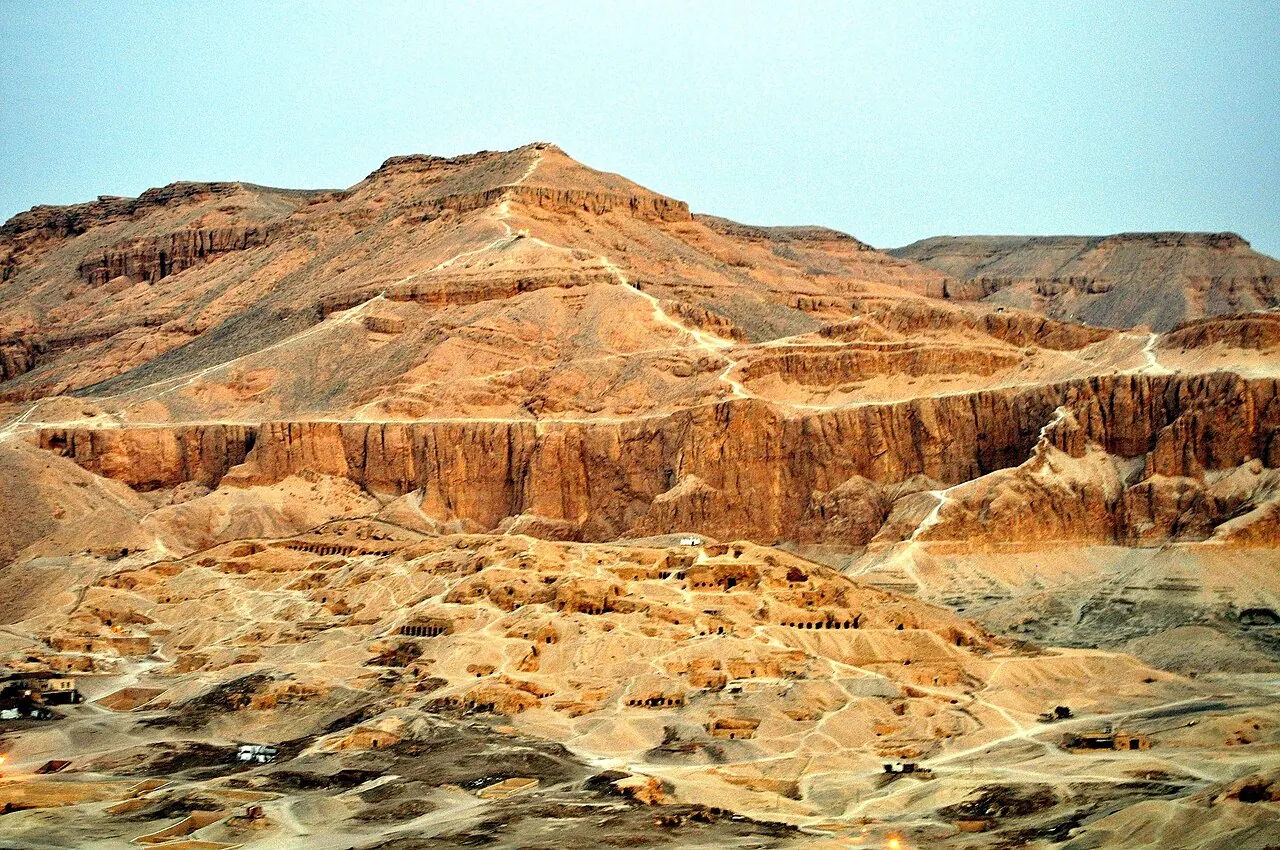
The kings of the New Kingdom (about 1550–1069 BC) were buried in this dry valley across the river from Thebes, today Luxor. For nearly 500 years, from the 18th to the 20th Dynasty, tombs for pharaohs and powerful nobles were cut into the rock here.
- c. 1550 BCThe New Kingdom begins; kings are buried in the valley
- 1069 BCThe New Kingdom ends
- 1827Wilkinson numbers the 21 open tombs
- 1817Belzoni finds the tomb of Seti I
- 1922Carter finds Tutankhamun's tomb
- 1979UNESCO World Heritage Site
See it with a guide
Tour guides may not talk to their groups inside the tombs, so they explain outside.
Sunset and rebirth
Why the West Bank
The sun set in the west to be reborn in the east, so Egyptians linked the west with death and buried their dead there.
The kings were buried below a pyramid-shaped peak that rises from the cliffs around the valley. The peak of al-Qurn rises above the Theban Hills.
Guarded
Hidden tombs instead of pyramids
Knowing the pyramids had been robbed, the kings chose hidden underground tombs in a remote desert valley. Special tomb police, the Medjay, guarded the burial ground.
Thutmose I is the first New Kingdom king known for certain to have been buried in the valley.
Corridors and halls
How a royal tomb was built
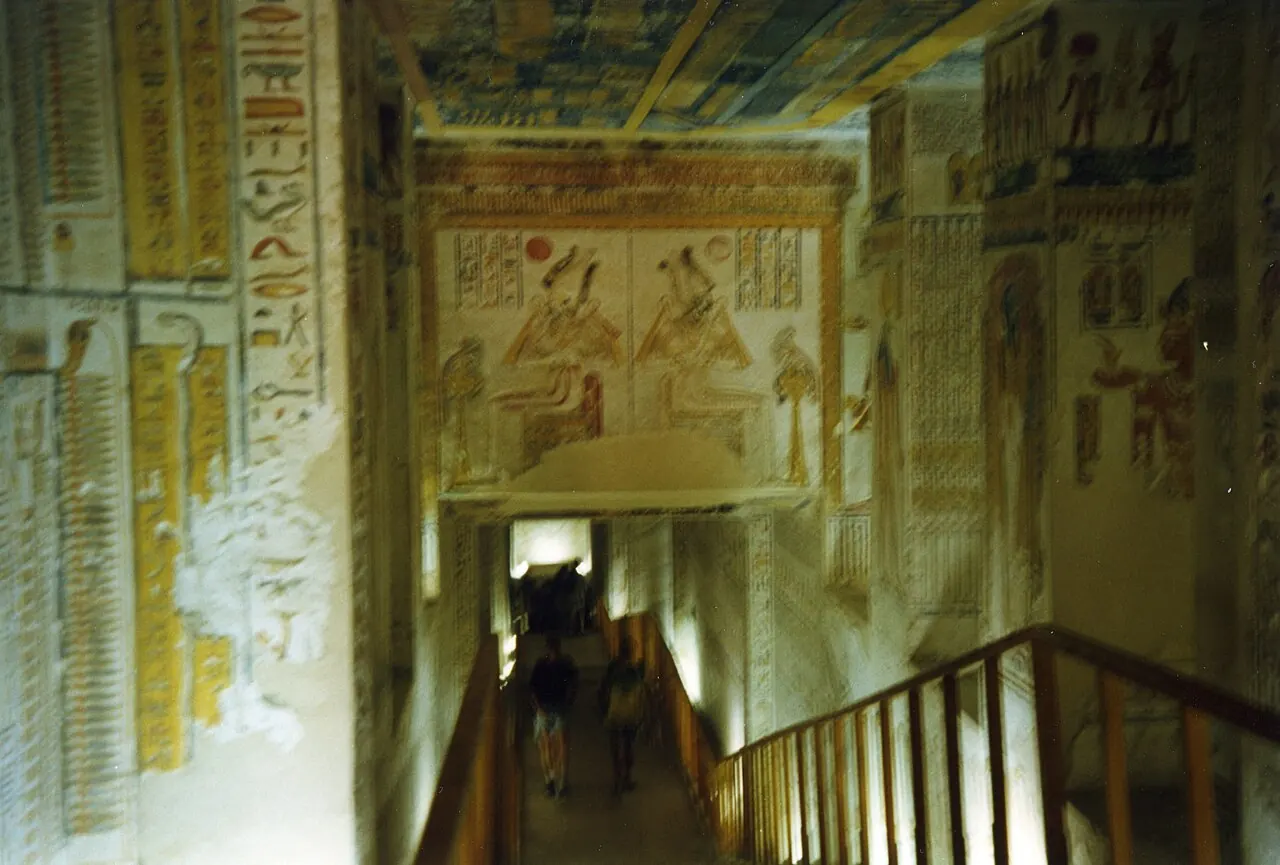

A typical tomb is a long sloping corridor cut into the rock, running down through one or more halls to the burial chamber. The royal tombs are painted with scenes from Egyptian myths about death and the afterlife.
KV9 is a row of sloping corridors that run in a straight line deep underground to the burial chamber. It was the first tomb in the valley to be decorated from end to end.
Ancient visitors
Robbers and early tourists
Almost all the tombs were opened and robbed in ancient times.
People were already visiting the valley as tourists in ancient times, above all under the Romans. Over 2,100 pieces of ancient Greek and Latin graffiti have been found in the tombs. Most of the ancient graffiti is in KV9, which has just under a thousand.
The tomb of Ramesses IX (KV6) has been open since ancient times; Roman and Coptic visitors left graffiti on its walls.
1817 to 1922
KV numbers and the great finds
Each tomb has a KV number, for Kings' Valley; Tutankhamun's tomb is KV62. In 1827 Wilkinson painted KV numbers over the 21 tomb doors then open in the East Valley.
Italian explorer Giovanni Battista Belzoni found the tomb of Seti I on 16 October 1817. In 1821 painted copies of rooms from the tomb were shown at the Egyptian Hall in Piccadilly, London.
Lord Carnarvon got the right to dig in the valley and hired Howard Carter. Howard Carter found Tutankhamun's tomb on 4 November 1922. Tutankhamun's is the only royal tomb in the valley found mostly intact.
Today
Floods and protection
Rare but violent storms send flash floods through the valley. The tomb of Merenptah (KV8), son of Ramesses II, has been badly damaged by flash floods over thousands of years.
On New Year's Day 1991 a rainstorm flooded the tomb through a crack in the burial chamber ceiling. A copy of the burial chamber has been built nearby to take pressure off the real tomb.
The valley became a UNESCO World Heritage Site in 1979, with the rest of the Theban Necropolis. In 2020 the Egyptian Tourism Authority put a full 3D model of KV9 online.
History questions
- Who was buried in the Valley of the Kings?
- For nearly 500 years, from the 18th to the 20th Dynasty, tombs for pharaohs and powerful nobles were cut into the rock here. Thutmose I is the first New Kingdom king known for certain to have been buried in the valley.
- Why were the kings buried on the West Bank?
- The sun set in the west to be reborn in the east, so Egyptians linked the west with death and buried their dead there.
- Why did the kings stop building pyramids?
- Knowing the pyramids had been robbed, the kings chose hidden underground tombs in a remote desert valley.
- Were the tombs robbed?
- Almost all the tombs were opened and robbed in ancient times.
- When was the Valley of the Kings discovered?
- People were already visiting the valley as tourists in ancient times, above all under the Romans. In 1827 Wilkinson painted KV numbers over the 21 tomb doors then open in the East Valley.