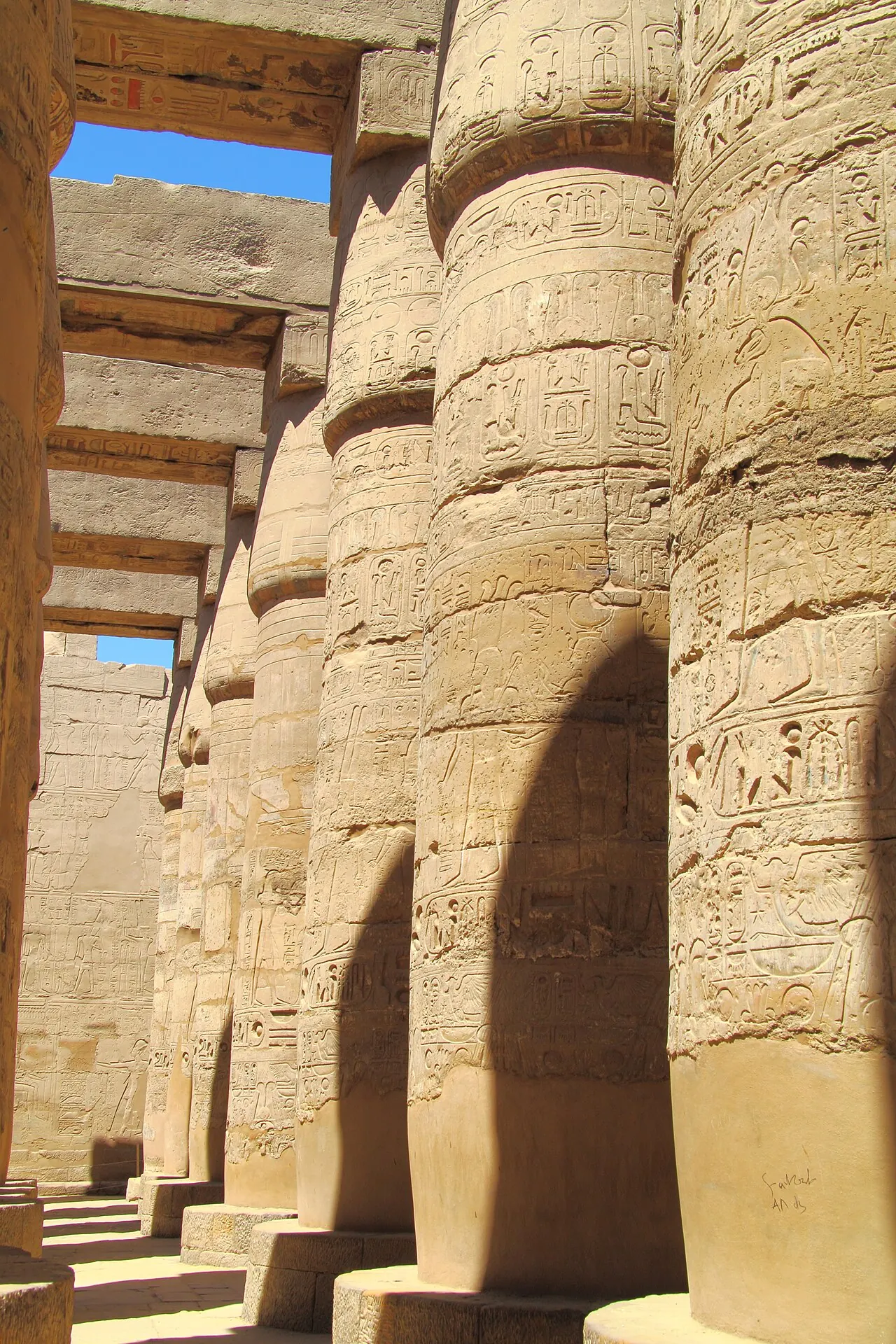
Karnak Temple
Karnak Temple, on Luxor's East Bank, costs $11 (EGP 600) for a foreign adult and $6 for a student. Karnak is open daily from 6:00 AM to 5:00 PM. Karnak is in the north of Luxor town and Luxor Temple in the south, 3 km apart.
- Ticket
- $11 EGP 600
- Open daily
- 6 AM–5 PM Every day of the week
- From Luxor Temple
- 3 km North of the town
- Columns
- 134 Great Hypostyle Hall
Karnak Temple tours
Most visitors see only the Precinct of Amun-Re, so many people mean just that part when they say Karnak.
East Bank
How do you get to Karnak from Luxor?
Karnak is in the north of Luxor town and Luxor Temple in the south, 3 km apart. The Corniche, the road along the Nile on the East Bank, links most of the main sights.
Luxor Museum is on the Corniche, about halfway between Luxor Temple and Karnak. Travellers report Luxor taxis have no meters, but drivers accept the going rate if you stay firm.
From the West Bank, cross the Nile first. Travellers report the local ferry across the Nile leaves only when it is full or when another ferry arrives. A 1,550-metre bridge across the Nile links the East and West banks.
A widened main road along the Corniche lets coaches from the Red Sea resorts reach Karnak and the Valley of the Kings quickly.
Foreign visitors
Karnak ticket prices
| Ticket | Adult | Student |
|---|---|---|
| Karnak TempleWith the Open Air Museum | $11EGP 600 | $6EGP 300 |
| Temple of MutOwn ticket | $4EGP 200 | $2EGP 100 |
The Karnak ticket also covers the Open Air Museum inside the temple grounds.
Dollar amounts are approximate; the office charges Egyptian pounds. Dollar amounts use the Central Bank of Egypt buy rate for the US dollar on 24 November 2026: EGP 54.1715.
Precinct of Amun-Re
What to see at Karnak
Karnak is a group of temple areas: the large Precinct of Amun, the Precinct of Mut to the south, the Precinct of Montu to the north and Akhenaten’s temple to the Aten in the east. Most visitors see only the Precinct of Amun-Re, so many people mean just that part when they say Karnak.
The Great Hypostyle Hall in the Temple of Amun has 134 columns. The twelve larger columns down the middle stand 21 metres tall. Most of the hall, and all of its carving, dates from the 19th Dynasty kings, starting with Seti I.
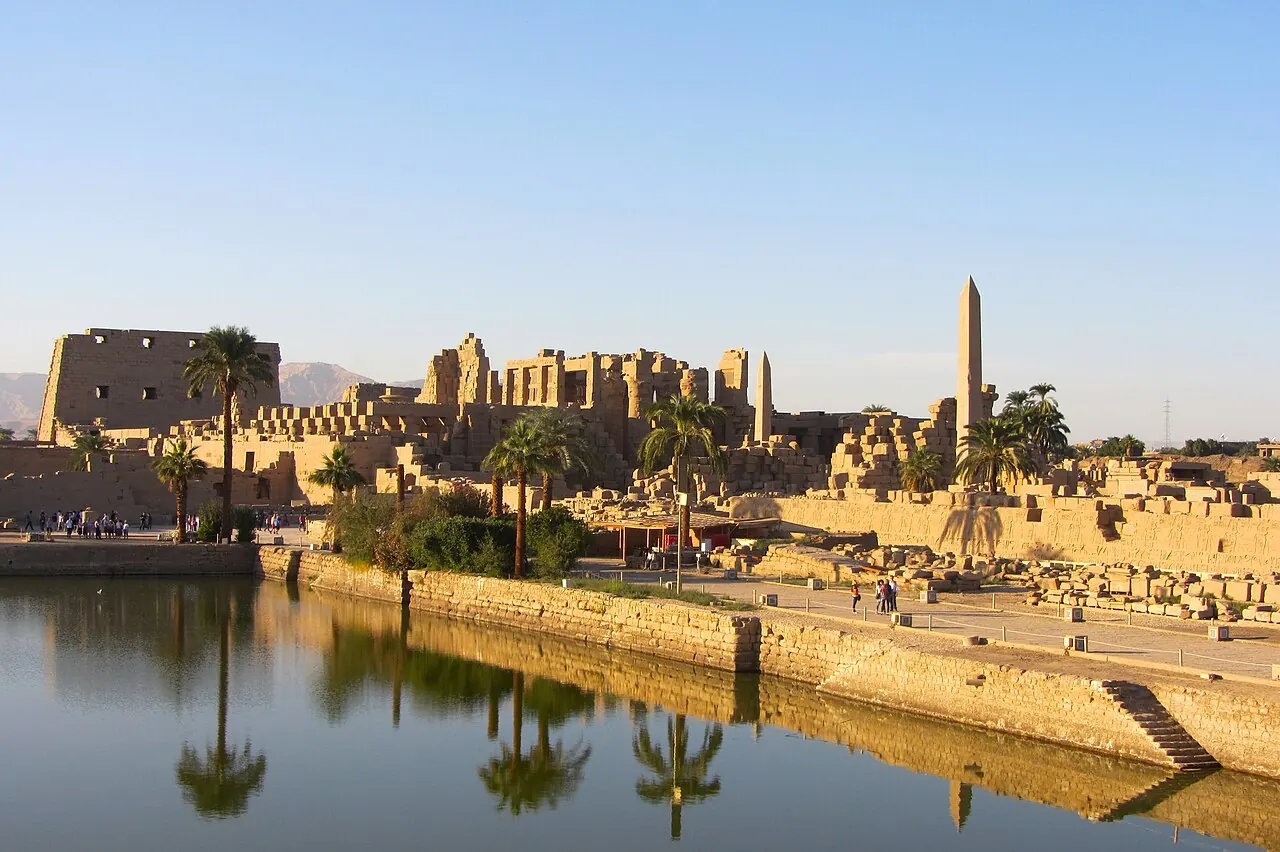

Hatshepsut’s obelisk at Karnak is almost 30 metres tall and weighs over 300 tons. The sacred lake, where priests washed before the temple rites, is still there today.
At the eastern end of Karnak stands the Akh-menu, a temple built by Thutmose III. Later, Christians built churches in the ruins; in the Festival Hall of Thutmose III you can still see painted saints and Coptic writing.
In the south-west corner of the Amun Precinct stands a complete temple to Khonsu. The Karnak ticket also covers the Open Air Museum inside the temple grounds.
The Temple of Mut at Karnak needs its own ticket: EGP 200 for adults, EGP 100 for students. The Precinct of Montu, north of the Amun-Re complex, is not open to visitors.
Two temples
Are Karnak and Luxor Temple the same?
No: they are two temples. Karnak is in the north of Luxor town and Luxor Temple in the south, 3 km apart. A processional road lined with sphinxes linked Karnak with Luxor Temple.
Unlike most temples, the Temple of Amun also has a north–south axis that points towards Luxor Temple.
Travellers who have time for only one of the two East Bank temples are advised to pick Karnak over Luxor Temple.
When to go
When is the best time to visit Karnak?
Karnak is open daily from 6:00 AM to 5:00 PM. Arrive early in the morning, above all in summer: by midday it gets very hot.
Travellers report Karnak is very crowded around sunset, when the sun is low, though it is good to see then too.
The best time to visit Luxor is winter, from November to early March. Summers in Luxor are extremely hot; winters are warm but can get cool at night.
The shrine of the sun god was built so that light falls on it at the winter solstice.
History
Who built Karnak, and how old is it?
Building at Karnak began under Senusret I (reigned 1971–1926 BC) in the Middle Kingdom. Nearly every king of the New Kingdom (about 1550–1069 BC) added something to Karnak. About thirty pharaohs added buildings, which is why Karnak is so large and so mixed.
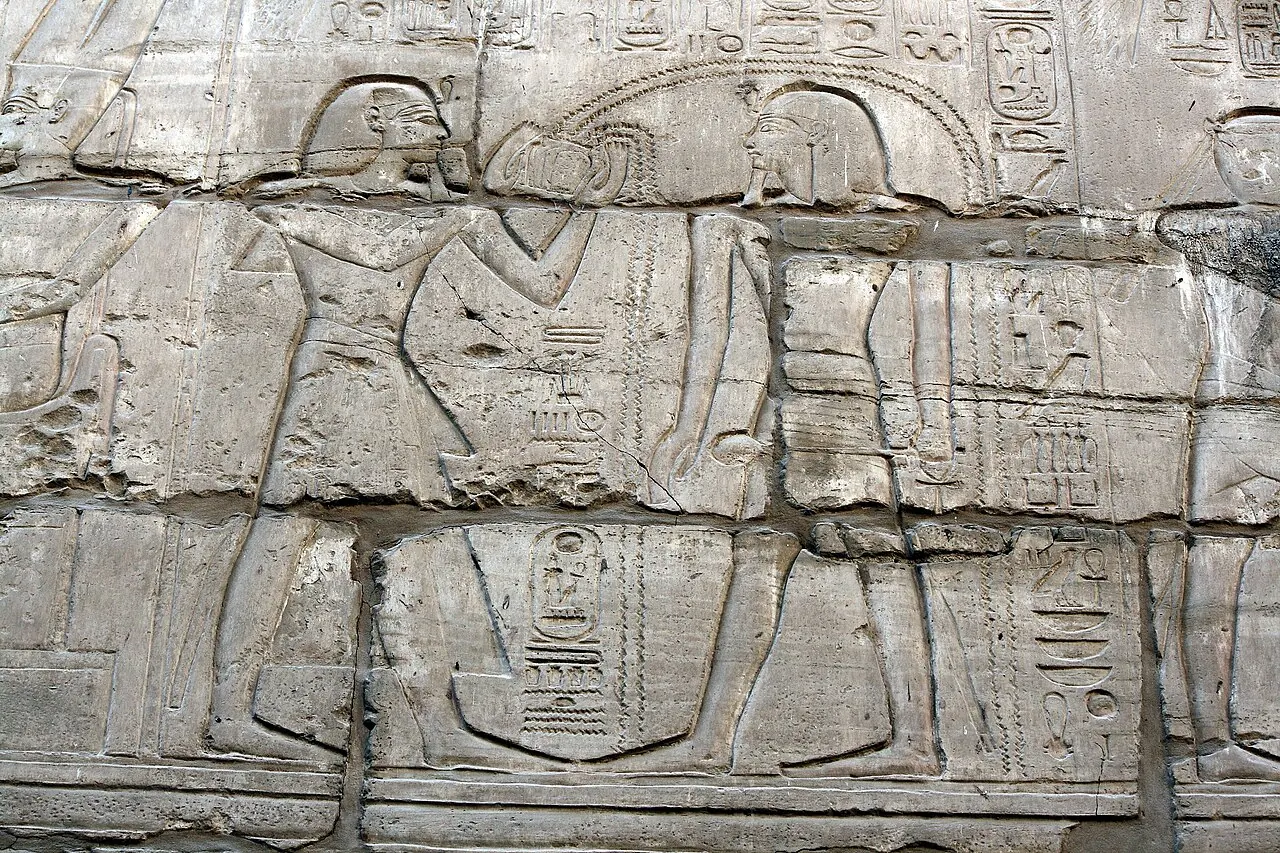

Its Great Temple of Amun was where the god Amun of Thebes was worshipped. The ancient name of the temple was Ipet-isut, “the most select of places”. The name Karnak comes from the nearby village of el-Karnak, which means “fortified village”.
Karnak is thought to be the second most visited historic site in Egypt, after the pyramids of Giza. Karnak joined the UNESCO World Heritage List in 1979, with the rest of ancient Thebes.
Across the Nile
Karnak and Hatshepsut's temple
Hatshepsut's temple stands across the Nile from Karnak Temple. Each year the Beautiful Festival of the Valley set out from Karnak and ended at this temple’s sanctuary of Amun.
Karnak Temple questions
- How much is the ticket for Karnak Temple?
- $11 (EGP 600) for a foreign adult, $6 (EGP 300) for a student. The Karnak ticket also covers the Open Air Museum inside the temple grounds.
- What are the opening hours of Karnak Temple?
- Karnak is open daily from 6:00 AM to 5:00 PM.
- Is Karnak on the East Bank or the West Bank?
- Karnak stands on the East Bank of the Nile at Luxor, the ancient Thebes, and holds many temples and chapels. Karnak is in the north of Luxor town and Luxor Temple in the south, 3 km apart.
- Are Karnak and Luxor Temple the same?
- No, they are two temples. Karnak is in the north of Luxor town and Luxor Temple in the south, 3 km apart. A processional road lined with sphinxes linked Karnak with Luxor Temple.
- What does Karnak mean?
- The name Karnak comes from the nearby village of el-Karnak, which means “fortified village”. The ancient name of the temple was Ipet-isut, “the most select of places”.
- How old is Karnak Temple?
- Building at Karnak began under Senusret I (reigned 1971–1926 BC) in the Middle Kingdom. Nearly every king of the New Kingdom (about 1550–1069 BC) added something to Karnak.