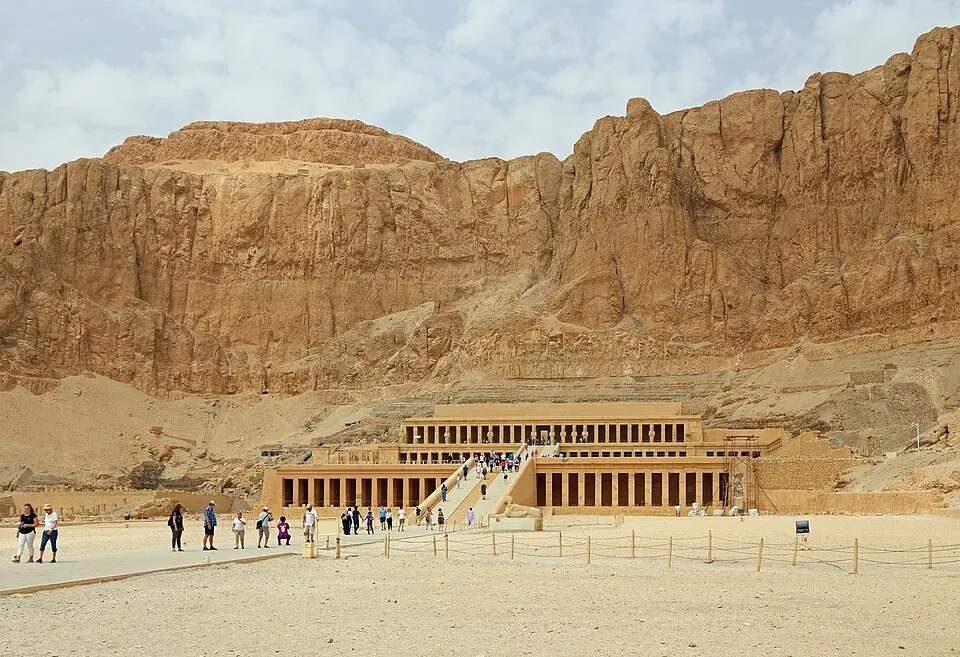
Luxor's West Bank
Luxor's West Bank holds the Valley of the Kings, the Valley of the Queens, Hatshepsut's temple, Medinet Habu and the Colossi of Memnon. A day with the valley, Tutankhamun's tomb and Hatshepsut's temple costs $35 (EGP 1,890) in tickets.
West Bank day tours
Travellers report that cheap hotel tours keep a fixed plan, often only 20 minutes at each site.
One day on the West Bank
The Valley of the Kings, the Valley of the Queens and Hatshepsut's temple each sell tickets at their own office; other West Bank sites share a central office.
Tickets for your day$35EGP 1,890
Deir el-Bahari · $8
Hatshepsut's temple
The Valley of the Kings lies just over the hills behind Hatshepsut's temple. The temple rises in three levels, each with a row of columns at the back.
Wall carvings show Hatshepsut's trading trip to Punt, thought to be near today's Eritrea. Hatshepsut's temple stands across the Nile from Karnak Temple.
Hatshepsut's temple at Deir el-Bahari: EGP 440 for adults, EGP 220 for students. Hatshepsut's tomb twists down over 200 metres, with its burial chamber 97 metres below the surface.
EGP 220
The Valley of the Queens
Queens, princes, princesses and high officials were buried in the Valley of the Queens from about 1560 to 1130 BC; pharaohs were buried in the Valley of the Kings. Travellers report the Valley of the Queens ticket is EGP 220 for its 3 open tombs; Nefertari's tomb needs its own ticket (October 2025).
Travellers report Nefertari's tomb (QV66) was closed in January 2026. The Valley of the Queens joined the UNESCO list in 1979, together with the Valley of the Kings and Thebes.
Temples
Medinet Habu and the Ramesseum
Medinet Habu is the memorial temple of Ramesses III. Travellers report that Medinet Habu gets fairly few visitors.
Medinet Habu costs $4 (EGP 230). The Ramesseum, Ramesses II's memorial temple, has the fallen statue that inspired Shelley's poem Ozymandias.
Deir el-Medina, first called Set Maat, the Place of Truth, was the village of the workers who built the royal tombs.
Since 1350 BC
The Colossi of Memnon
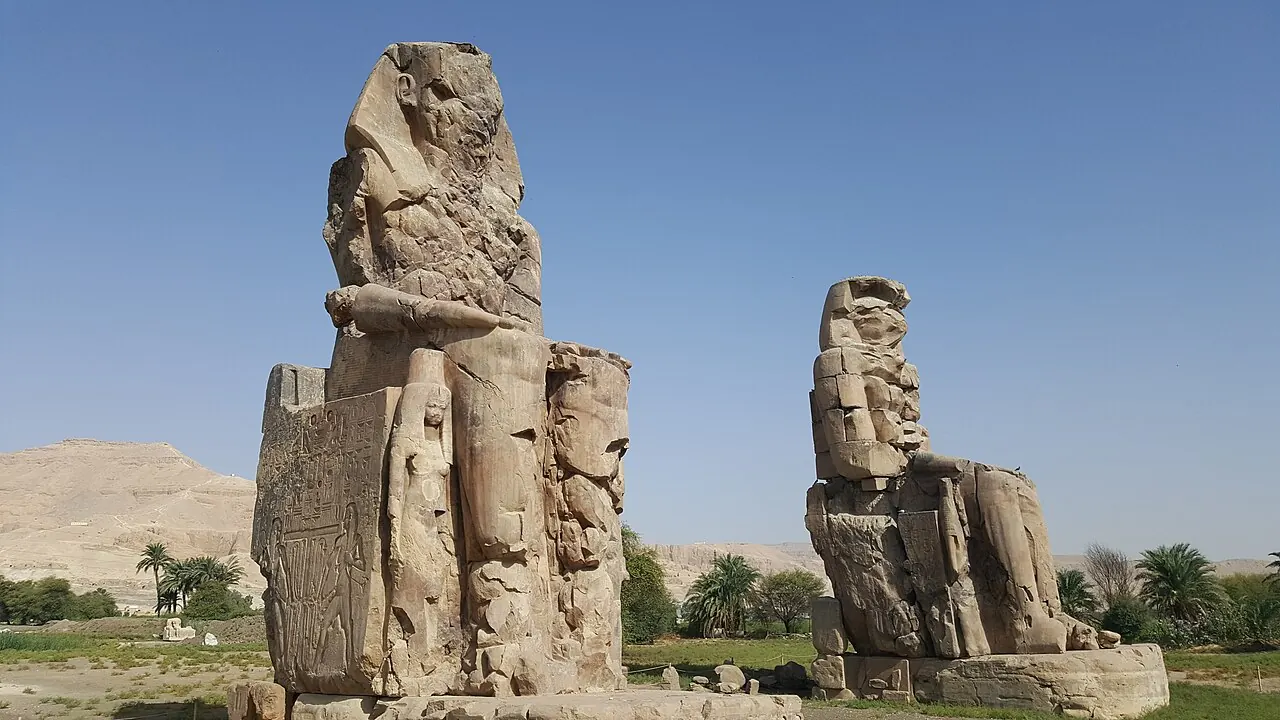

The Colossi of Memnon are two large stone statues of Amenhotep III in front of the ruins of his memorial temple. They have stood since 1350 BC.
$4
Carter House
Howard Carter built his mudbrick house in 1910. Carter House became a museum in 2009.
A copy of Tutankhamun's tomb by Factum Arte has stood in the Carter House grounds since 2014. Carter House: EGP 220 for adults, EGP 110 for students.
From the air
Balloons at sunrise
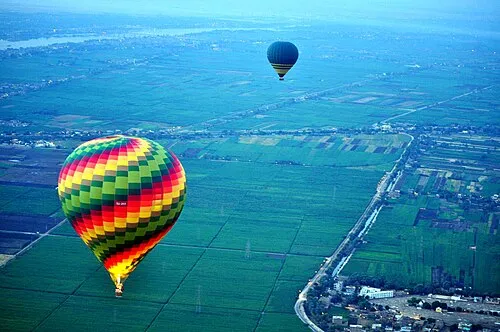

Hot air balloon rides over the West Bank go up at sunrise or in the evening. Travellers report each balloon flight lasts at least 45 minutes, weather permitting. Early in the morning the weather is cooler and many balloons fly over the West Bank.
Luxor balloon rides
Early in the morning the weather is cooler and many balloons fly over the West Bank.
West Bank questions
- What is on the West Bank of Luxor?
- The Valley of the Kings, the Valley of the Queens, Hatshepsut's temple, Medinet Habu, the Ramesseum, Deir el-Medina, the Colossi of Memnon and Carter House.
- What is the difference between the Valley of the Kings and the Valley of the Queens?
- Queens, princes, princesses and high officials were buried in the Valley of the Queens from about 1560 to 1130 BC; pharaohs were buried in the Valley of the Kings.
- Is Hatshepsut's temple near the Valley of the Kings?
- The Valley of the Kings lies just over the hills behind Hatshepsut's temple.
- Can you walk over the hill from Hatshepsut to the Valley of the Kings?
- Hiking over the mountain between the valleys is no longer allowed, and police stop walkers.